

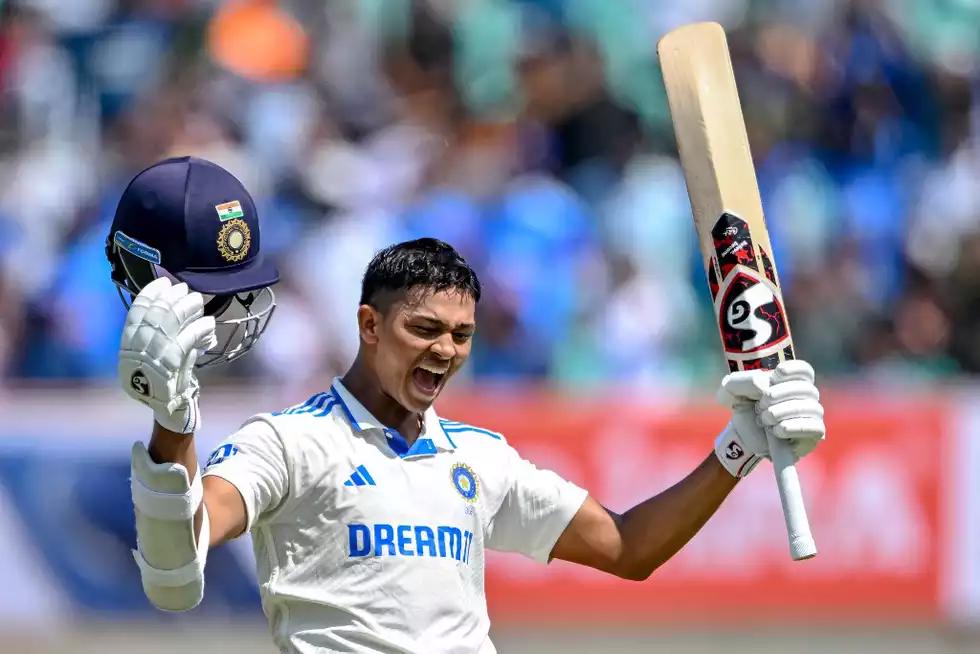
Image Credit- AFP
During the most recent IPL match between the Mumbai
Indians and Rajasthan Royals at the Wankhede in Mumbai, Rohit Sharma questioned
Yashasvi Jaiswal about the strength of his strokes. Jaiswal had hit a
remarkable 62-ball innings of 124, smashing 16 fours and eight sixes. Jaiswal
was asked by Rohit, “Where did you get the power from?”
After the Test, when Jaiswal was questioned about it, Rohit asked the media to
leave him alone, saying he didn’t want the left-handed player, 22, to get
sidetracked from cricket by the media attention. Ben Duckett, however, who
scored an incredible century (153) in England’s opening session, claimed
Jaiswal is a future superstar. In Jaiswal, Michael Vaughan noticed a new
Virender Sehwag.
Those compliments aren’t in vain. In the second
innings of the recently finished Test match, he mesmerised millions with an
incredible exhibition of power hits. To shatter the record for most maximums in
a Test innings, he would need to hit one more six. The shots were a magnificent
display of raw force, with each blow leaving a lasting effect. His wrath was
directed on one of the world’s most reputable fast bowlers, James Anderson.
He had to go through multiple stages of training
before he could gain strength and power. If one were to use a baseball analogy,
he was casting earlier when the need was actually a snap. Casting is recognised
as occurring when the hands do not roll over (bottom hand over top), and the
front elbow remains bent during impact. When one’s wrists slide over and his
front elbow remains locked at the contact, one snaps.
Furthermore, Jaiswal didn’t have an onside game when
he initially joined his IPL team (RR). Those who have followed him claim that
while retaining his off-side strengths, the on-side play was developed there.
The strategy was doubly beneficial because a batter needs to make sure the bat
is coming from a little wider angle in order to improve their on-side game,
which also helps with power generation. Next, they addressed the front elbow’s
snapping and straightening.
To guarantee that his shots had power, the weighted
bats and balls at RR were of various kinds. These exercises complemented every
drill, which has a unique collection of multidimensional factors. The striking
sixes that Anderson hit—one through on-side, one off-side, and one
straight—were the outcome of this.
The real challenge for Jaiswal lies ahead – in Australia and England. In South
Africa recently, he did not exactly do well. Along with preparing for all
formats, he has to factor in the toll that’s going to take on his mind and
body. However, knowing Jaiswal and his proclivity for hard work and success and
the cricketing journey he has traversed so far, he should come through those
tests too.