

Image Source: X
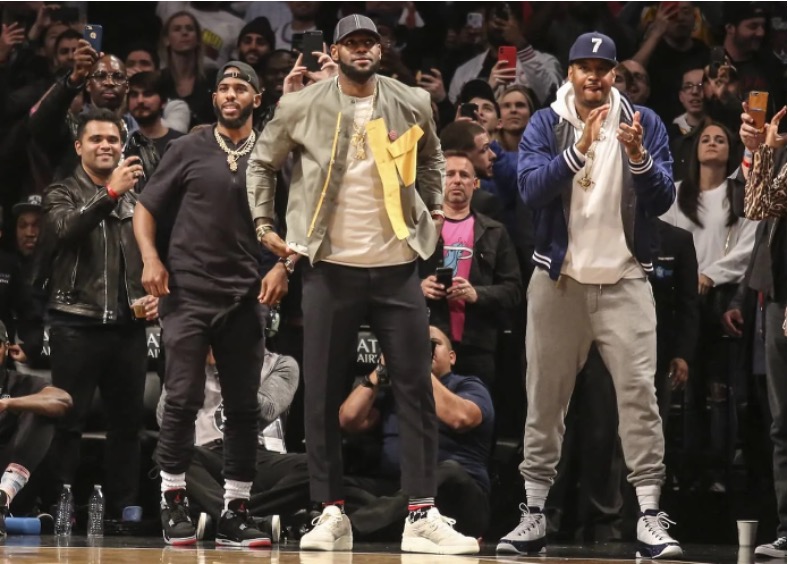
[Saba Sports News] Adrian Wojnarowski recently delved into the transformative impact LeBron James, Carmelo Anthony, and Chris Paul had on the NBA during his appearance on the ‘7PM in Brooklyn’ podcast.
He highlighted how their moves in the late 2000s and early 2010s redefined the league as both a business and cultural phenomenon.
“The business really started changing in 2008 with the Olympics and then dramatically in 2010 when LeBron and Chris Bosh went to Miami. Melo left Denver, and Chris Paul moved on from New Orleans,” Woj said. “That ’08 Olympic team planted the idea that players could control their destiny—play together, call the shots, and reshape the league.”
Woj explained how this shift created a new era where trades, free agency, and transactions became headline events, transforming the offseason into a spectacle. “Before, free agency and trades mattered, but it wasn’t a 24/7 obsession. After LeBron went to Miami, it became this huge story. Fans wanted every detail—cap space, trade rumors, GM strategies. It was a new way of following the game.”
Woj credited platforms like Twitter and Yahoo for amplifying this transformation, making fans aware of the intricate workings of the NBA.
“Suddenly, GMs were part of the story. People knew names like Daryl Morey, not just Hall of Fame players-turned-executives. Every move, even clearing cap space, had a narrative that captivated fans.”
He also reflected on his own journey as a reporter during this time, noting how breaking news and building relationships with younger agents and GMs helped shape his career.
“I went after the younger generation—those who understood Yahoo and the internet culture. Breaking news gave me credibility, and soon, even the league’s big players took notice.”
Ultimately, Wojnarowski credited the decisions of LeBron, Melo, and CP3 for creating a new industry within the NBA—where player agency and transactions became as important as the game itself.
Their moves sparked a culture shift, turning the league into a year-round drama where trades, rumors, and free-agent signings became central to its identity.