

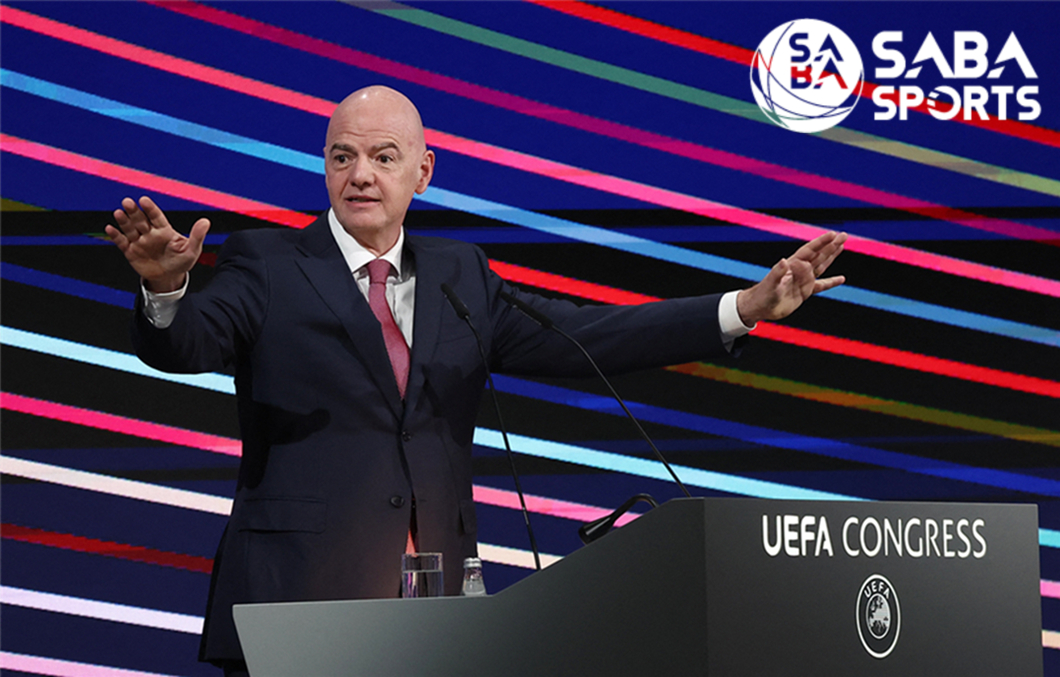
Source: REUTERS/Zorana Jevtic
[Saba Sports News] Recently, FIFA and the WTO Secretariat jointly released two research reports revealing the significant socio-economic impact the 2025 Club World Cup and the 2026 World Cup will have in the United States and globally. These two studies, completed by the independent agency OpenEconomics (OE), continue the “GoalEconomy” initiative cooperation between FIFA and WTO, which started after the 2023 Australian-New Zealand Women’s World Cup. OE has long provided policy and investment project design support for institutions and businesses. The research report shows that the first 32-team Club World Cup, covering 11 host cities, will have a total of 3.7 million spectators, with a global GDP growth potential of 21.1 billion (the United States accounting for 9.6 billion), bringing 17.1 billion in total output within the United States, 3.36 billion in social benefits, and creating 105,000 new jobs. The 2026 United States-Canada-Mexico World Cup is expected to attract 6.5 million on-site spectators, with a global GDP growth potential of 40.9 billion, creating 824,000 full−time equivalent jobs, and a social benefit value of 8.28 billion. Of these, the United States is expected to add 185,000 jobs, with a total output of 305 billion and a GDP contribution of 17.2 billion. Therefore, the 2025 Club World Cup and the 2026 World Cup will have a significant socio-economic impact in the United States and globally.