

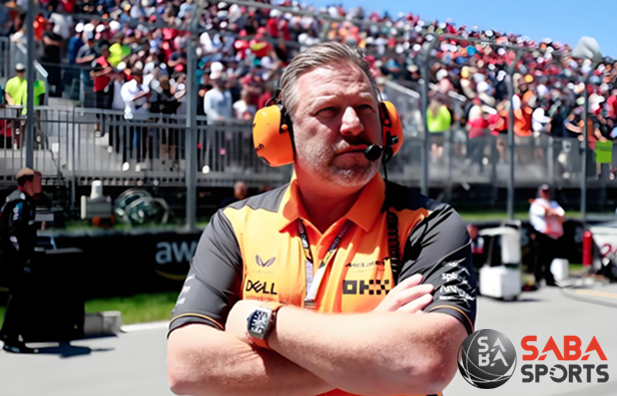
[Saba Sports News] Recently, McLaren CEO Zak Brown revealed in an interview that when Liberty Media first took over Formula 1, he was offered a role within the F1 management hierarchy, a position that once greatly appealed to him. By comparison, the role initially offered by then McLaren chairman Ron Dennis was far less attractive. However, the situation soon took a turn. As internal shareholder conflicts broke out at McLaren, Ron Dennis departed from the company, and Brown was presented with a new offer granting him far greater authority and broader room to operate. In the end, he turned down the opportunity to join F1’s governing body and joined the McLaren F1 Team in 2016, before officially taking office as CEO two years later.
Brown admitted the real reason behind his decision was straightforward. While a role in F1 management came with enormous commercial value, those in such positions are merely spectators once the lights go out for the race. He instead wanted to stay right at the heart of the action. At that time, McLaren was stuck in its lowest ebb, plagued by internal friction and political infighting. Morale among staff was low, and both sponsors and fans had lost faith in the team. Even so, Brown recognized the inherent value of this historic powerhouse and resolved to completely rebuild its identity.
One of the most visible changes after Brown’s arrival was pushing for McLaren to reintroduce its iconic papaya orange livery. He aimed to move the team away from its cold, aloof image and transform it into a younger, more dynamic brand that could better resonate with fans. At the same time, he vigorously ramped up commercial development. He firmly believed that only by generating more revenue could the team sign top-tier drivers and build a new wind tunnel. Thanks to Zak Brown’s efforts, McLaren has firmly returned to the title-contending pack in Formula 1.
In the editor’s opinion, Zak Brown’s revival story is not merely an on-track comeback; it is a systematic project integrating commercial innovation, organizational reform and cultural reshaping. With a clear strategy, decisive decision-making and unwavering commitment to the McLaren legacy, he steered the once struggling historic giant back toward the pinnacle of Formula 1. Even amid setbacks in the debut year of the 2026 regulations, his leadership is still widely regarded as a benchmark for modern F1 team management.