

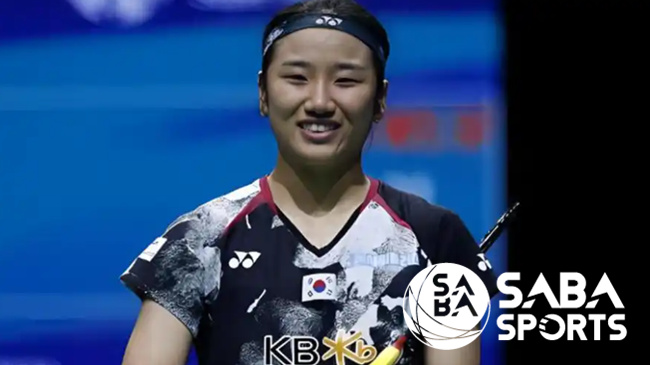
[Saba Sports News] Following the official approval of the badminton new 15-point scoring system, An Se-young, South Korea’s top women’s singles player who has dominated the world scene for years, has rarely openly admitted her weakness of being slow to find her rhythm. She stated that her classic endurance-based playing style is facing systematic challenges, and her entire match reading and rhythm control logic needs to be completely overhauled and rebuilt.
Numbers do not lie. Under the long-standing 21-point system, almost all of An Se-young’s classic matches followed the exact same pattern: feeling out her opponent in a tight first game, stepping up pressure in the second, and overwhelming rivals with superior stamina in the decider. Under the new 15-point format, however, each game enters a do-or-die intensity around the 11-point mark, equivalent to the pressure level at about 16 points under the old system. A slow start for just a few minutes could still be recovered from in the 21-point format. But under the new rule, it may cost her the entire game outright. The room for a late comeback has been squeezed to the limit, and her margin for error has shrunk drastically from an hourglass to a stopwatch.
In a sense, the secret behind South Korea badminton’s success over the past two decades can be summed up in one word: endurance. Now that stamina advantage no longer holds its former value, the Korean team’s tactical system is facing a crisis of confidence.
In my opinion, the 15-point system greatly amplifies the importance of opening-point scoring and devalues the significance of long rallies, dealing a systematic blow to South Korea’s traditional playing style. An Se-young will have to adjust her match strategy and switch straight into an aggressive mode right from the start.