

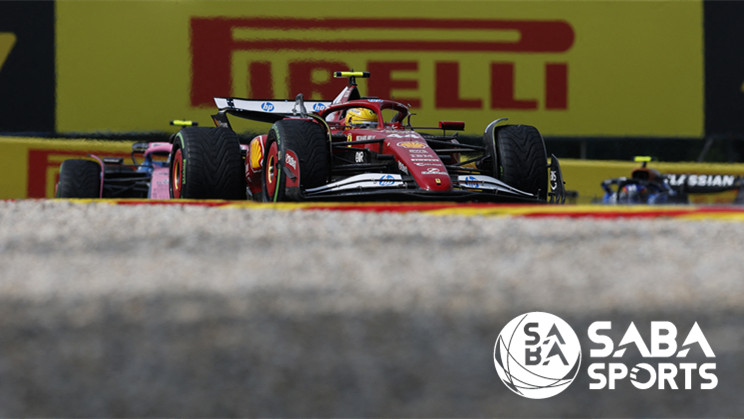
Source:REUTERS/Stephanie Lecocq
[Saba Sports News] At last weekend‘s F1 Belgian Grand Prix, Lewis Hamilton narrowly missed out on sixth place after a relentless chase that lasted nearly the entire race. His radio message — “I‘ve got no fuel left“ — instantly went viral, exposing Ferrari‘s controversial fuel strategy. Starting from 17th on the grid, Hamilton charged through the rain-affected Spa circuit like a beast unleashed, breaking into the top 10 within just a few laps. Ferrari had equipped his car with a high-downforce setup paired with a new hybrid system, a bold gamble that initially paid off. However, as the race reached its critical phase, Hamilton‘s radio crackled with repeated conservative orders to “lift and coast“ — a fuel-saving directive that forced him to abandon attacks. He closed in on Williams‘ Alexander Albon, poised to challenge for sixth, but his engineer‘s only response was: “Keep coasting.“ In the end, Hamilton crossed the line just 0.7 seconds behind Albon, powerless to launch a final assault. Post-race, Hamilton revealed the reason: he couldn‘t attack because the car was critically low on fuel, unable to sustain the high-downforce configuration. The incident sparked widespread criticism of Ferrari‘s strategy — why fit Hamilton‘s car with a high-downforce rear wing but fail to provide enough fuel to exploit it?