

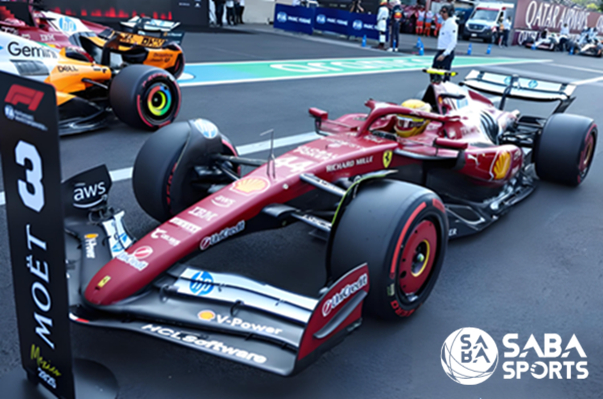
[Saba Sports News] The newly developed power units for this F1 season automatically slow down at the end of straights to recover energy, a design that has drawn industry warnings over potential major crashes. During the F1 Japanese Grand Prix, Oliver Bearman crashed heavily into the barriers at high speed and was injured due to a sudden, large difference in relative speed with Franco Colapinto.
In the wake of Bearman’s incident, former F1 driver David Coulthard has put forward a solution aimed at preventing similar dangerous accidents in the future. Speaking on the Full Speed podcast, Coulthard suggested that energy recovery rules should be exempted at certain corners, as drivers are already accustomed to the normal speeds through those turns. One corner that particularly concerns him is Eau Rouge at Spa‑Francorchamps in Belgium. Coulthard noted that Eau Rouge is one of the most iconic corners in the world. When drivers crest the hill, they cannot see if there is a car on the other side, creating a blind spot. For this reason, he insisted the energy recovery rule must be waived there.
In our view, David Coulthard’s proposal essentially calls on the FIA to return to racing’s roots, where driving is driver‑led and defined by mechanical limits. While F1 officials have acknowledged the issue, they are constrained by commercial and environmental targets and prefer minor adjustments over a full overhaul.