

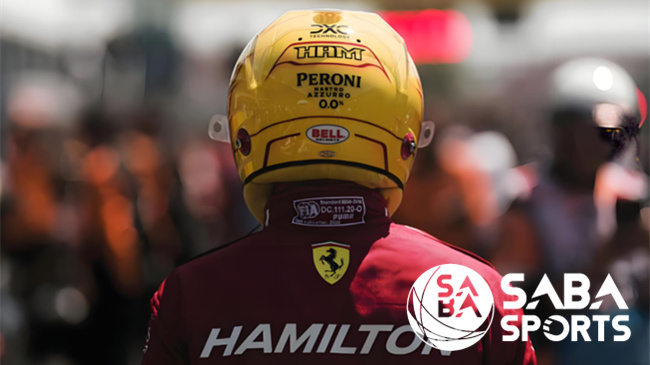
[Saba Sports News] After another disappointing weekend at the Miami Grand Prix, Lewis Hamilton has openly voiced his frustration with Ferrari’s racing simulator system. He even announced that he will stop using the simulator for preparation ahead of the Canadian Grand Prix.
The Miami Grand Prix turned out to be a tough outing for Hamilton. In the sprint race, he finished more than 15 seconds behind his teammate Charles Leclerc. During the main race, he was involved in a collision with Franco Colapinto, which damaged his car and severely compromised its downforce for the rest of the race. He eventually crossed the line in seventh place. He was later promoted to sixth after Leclerc received a 20-second time penalty post-race. In Hamilton’s view, the problem lies far beyond the on-track performance — it stems from flaws in Ferrari’s entire pre-event preparation process. He revealed that he had spent nearly every week working on the simulator ahead of Miami, hoping to refine car setups and fine‑tune data correlations. However, once on the actual track, the car’s real behaviour was completely different from what the simulator had predicted.
Hamilton did not mince his words: the setups he calibrated perfectly in the simulator simply did not translate to real track conditions, making this form of preparation ineffective for him. He even believes that had he adopted Leclerc’s car setup from the start, his entire weekend would have been far stronger. As a result, he has decided to stay away from the simulator before the Canadian Grand Prix. He will only take part in factory meetings and engineering discussions, hoping to regain his rhythm by stepping back from an unreliable simulator programme.
In the editor’s opinion, Hamilton’s decision to suspend simulator sessions is a pragmatic move. It avoids futile work and cuts down wasted time on an inaccurate tool. At the same time, it pushes the team to focus more on real-world data, drawing more reliable feedback from factory debriefs and on-track testing.