

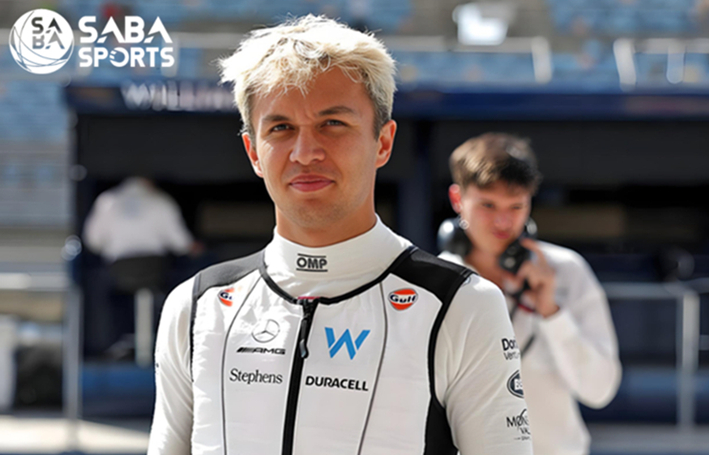
[Saba Sports News] A sudden incident unfolded during the Miami Sprint Qualifying. The FIA Stewards confirmed after the session that Alexander Albon was placed under investigation for suspected track limits violations in SQ1. The decision not only affected the qualifying results but also triggered brief chaos in the pit lane right after.
At the end of SQ1, Albon narrowly advanced in 16th place, while Liam Lawson finished 17th and was eliminated. Under normal procedures, the standings were considered finalized, yet a dramatic turn of events quickly drew attention. Lawson suddenly turned back from the exit tunnel and sprinted all the way back to his team’s pit box. This unusual move immediately sparked speculation among onlookers, who believed a potential track limits infringement might lead to revised classification results. According to the rules, if a driver ahead has their lap time deleted for a violation, drivers behind are eligible to be promoted as replacements.
Lawson’s abrupt return was therefore interpreted as his team having received inside notice, preparing him to rejoin SQ2. However, no official revised notification was released promptly on site. Albon proceeded normally into the second qualifying segment, while Lawson was ultimately not allowed to return to the session, leaving the whole situation full of uncertainty and confusion.It was not until later that the FIA Stewards issued an official statement, confirming Albon was indeed under investigation for suspected track limit breaches. Since the announcement was made after SQ2 had already commenced, any potential penalty could no longer alter the completed qualifying progression. This timing gap made the whole incident highly controversial and rendered Lawson’s earlier rushed return rather awkward.
In my opinion, while the Miami Sprint Qualifying saw impressive performances from drivers such as Lando Norris and Andrea Kimi Antonelli, the overall session was marred by on-track disorder, team misjudgments and poor race control organization. It is widely regarded as a glaring blunder, and the label is well-deserved. The incident has once again cast doubts over the rationality of Formula 1’s sprint format, highlighting an urgent need for improvements in traffic management and pit lane coordination.