

(Image Source: Getty)
[Saba Sports News] In the opening Test, Pakistan’s seam bowling came under scrutiny for not delivering expected high speeds, drawing reactions from both Pakistani supporters and the Australian cricket fraternity.
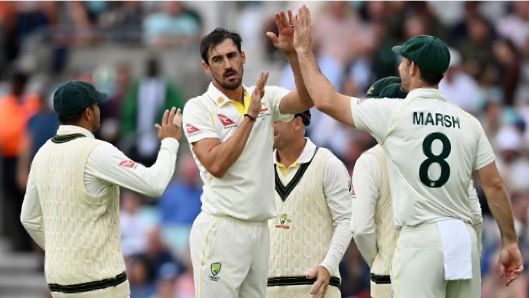
Mitchell Starc, Australia’s pace spearhead, expressed his astonishment at the slower speeds of the Pakistani bowlers, as the cricket world generally anticipates speeds in the 150 kph range from them. Addressing the media at the MCG, Starc remarked, “I think everyone was slightly surprised at the lower pace of the Pakistan bowlers, when you’re generally used to some guys getting in the 150s [kph].”
While Starc acknowledged the importance of speed in cricket, he also pointed out that it’s not the sole determining factor. Pakistan’s pace battery faced limitations with Naseem Shah out due to injury and Haris Rauf absent from the series. Shaheen Shah Afridi, Pakistan’s leading fast bowler, also couldn’t reach his usual high speeds following a knee injury, averaging around the low 130s kph in the first Test.
This disparity in pace was evident, especially on Perth’s lively pitch, where Australian bowlers consistently delivered mid-140s kph. Starc, however, noted that at venues like the MCG, sheer pace might not be as critical. He highlighted the effectiveness of bowlers like Scott Boland, who, though not the fastest, excels in generating significant lateral movement on his home turf.
Former Pakistani captain Waqar Younis echoed these concerns on ESPN’s show “Around the Wicket,” lamenting the absence of the characteristic excitement associated with Pakistani fast bowlers known for their high-speed deliveries. “People used to come to watch Pakistani pace bowlers running in hard and bowling 150 clicks. That’s what I’m not seeing, and that’s what my worry is,” said Younis.
With Shahzad sidelined due to a stress fracture, Pakistan’s current series against Australia has highlighted a pressing need to reassess their fast-bowling options. This situation has raised concerns among fans and cricket analysts about the future effectiveness of Pakistan’s traditionally strong pace attack.