

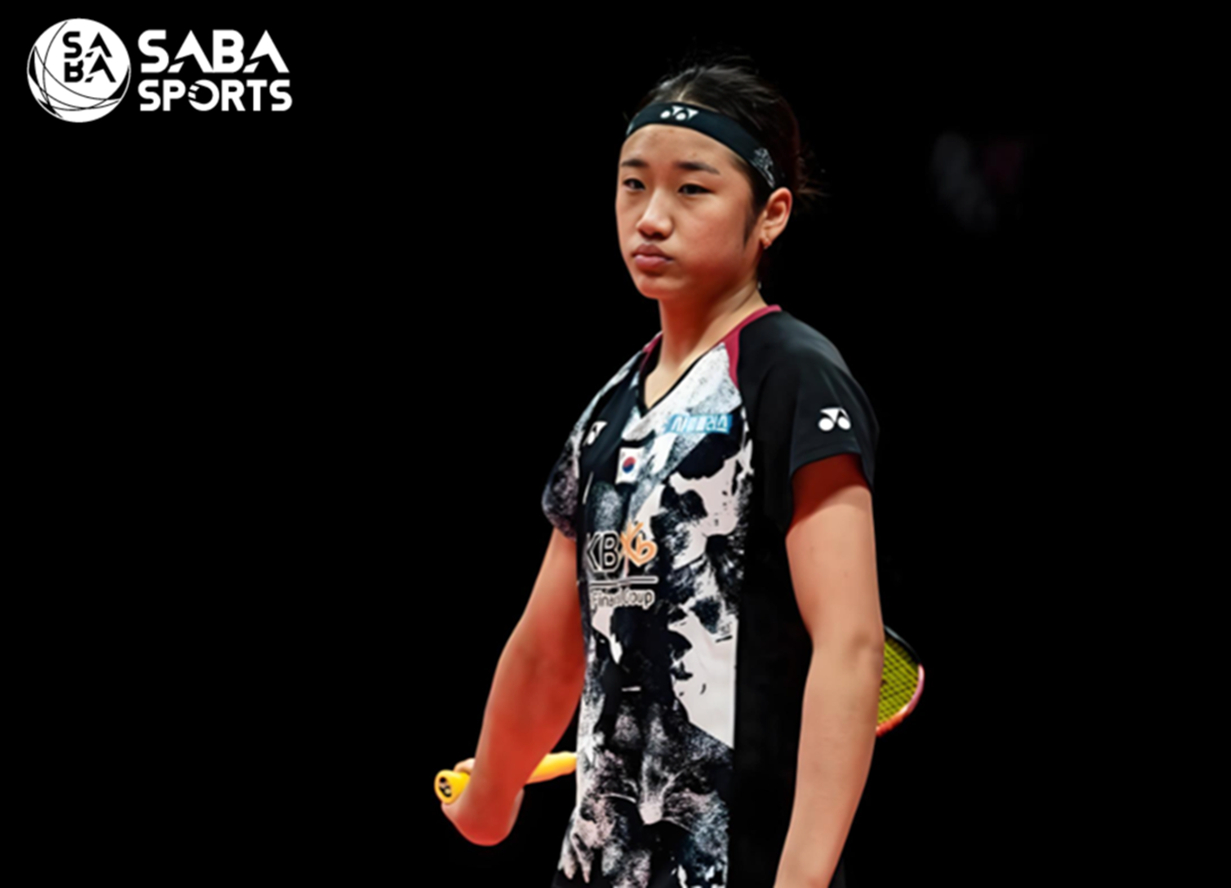
[Saba Sports News] In the women’s singles semi-final of the 2026 Uber Cup held in Horsens, Denmark, world No.1 An Se-young defeated Indonesia’s Putri Kusuma Wardani 2-0 (21-19, 21-5). Judging purely from the scoreline, it appeared to be an ordinary routine win. However, viewed under the newly confirmed best-of-three 15-point badminton scoring system, the picture looks rather different.
In the opening game, An Se-young went into the interval trailing 10-11. After the mid-game break, she remained unsettled under Wardani’s attacking pressure and was the first to concede 15 points to her opponent. It was only afterwards that An refocused and sealed the first game 21-19. Had the tournament adopted the new 15-point format, she would have lost the opening frame 13-15, which could have completely altered the course of the match. Statistically, this marks the second time at this tournament that An Se-young has let an opponent reach 15 points first. The previous occasion came in the group stage against Thailand’s Ratchanok Intanon.
An has long been known for her distinctive playing style: even if slightly on the back foot in the opening probing phase, she can rely on superior stamina, concentration, and smooth transition from defence to offence to turn the tide and overtake rivals. Under the current 21-point system, she still has plenty of time to regain her rhythm even if falling behind midway through a game. Yet the best-of-three 15-point format set to be introduced from 2027 works in an entirely different way. Under the new scoring structure, An Se-young’s greatest strengths — ample match time, endurance dominance and her late-game control — will be put to the ultimate test.
In my opinion, the new scoring system is more than just a technical rule adjustment; it represents a redefinition of badminton’s core philosophy of “endurance versus speed”. In the long run, women’s singles may enter an era of fierce multi-player competition, with greater randomness in results and more frequent changes of champions. It is likely to evolve into a highly competitive open landscape similar to the current chaotic pattern seen in men’s singles.