

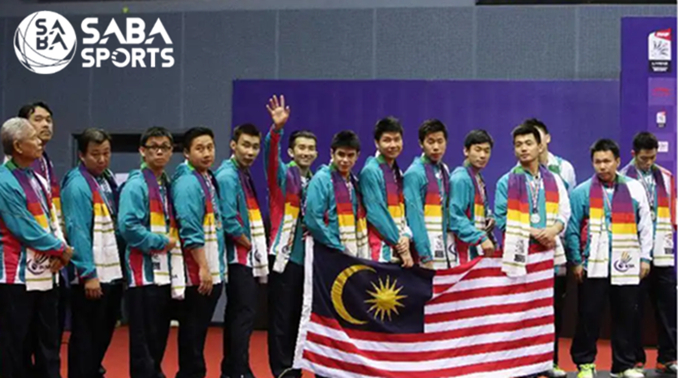
[Saba Sports News] In the quarter-finals of the Thomas Cup World Men’s Badminton Team Championship, China defeated Malaysia with a crushing 3-0 victory, dashing Malaysia’s hopes of winning a medal once again. “We keep looking for the next Lee Chong Wei, yet we forget to nurture a squad of teammates who can fight side by side.” This viral online comment is like a scalpel, precisely cutting to the core malaise of Malaysian badminton.
After Lee Chong Wei retired from the court with three Olympic silver medals and four World Championship runner-up titles, the entire Malaysian badminton community and even society at large have fallen into an almost obsessive state of anxiety. They frantically search for “the next prodigy”, while ignoring that the fertile soil required to cultivate top talents is turning barren. Looking back at Lee Chong Wei’s golden decade, behind his glorious record of 69 open titles and 349 weeks as world No.1, he single-handedly shouldered the sporting hopes of an entire nation.
Beyond the spotlight and public acclaim, the narrative of “one man standing against a whole nation” masks the severely lopsided resource allocation in Malaysian badminton, as well as a complete generational gap in talent development. To this day, many still believe it was Lee Chong Wei who turned Malaysia into a badminton powerhouse. But the facts speak for themselves: Malaysia has claimed 5 Thomas Cup titles, 3 World Cup crowns and 6 Asian Games championships. Long before Lee Chong Wei, Malaysia’s greatest badminton glories lay in doubles events. It was an era of all-round success, with strong performers in both men’s singles and doubles. The national team was never dependent on a single individual.
The problem today is not a lack of talent, but a flawed overall ecosystem — from the culture of idol-worshipping and skewed resource distribution to outdated training systems — that can no longer nurture new elite players on a sustainable basis. With this early exit from the Thomas Cup, Malaysia’s men’s team will extend its embarrassing 34-year title drought in the tournament.
In my opinion, for Malaysian badminton to stage a genuine revival, the top priorities are reforming its rigid institutional structure, upgrading its lagging youth training system, and abandoning its short-sighted, quick-fix mindset. The ultimate goal should not be to rush into finding “the next Lee Chong Wei”, but to patiently foster a thriving talent ecosystem that can produce champions continuously.