

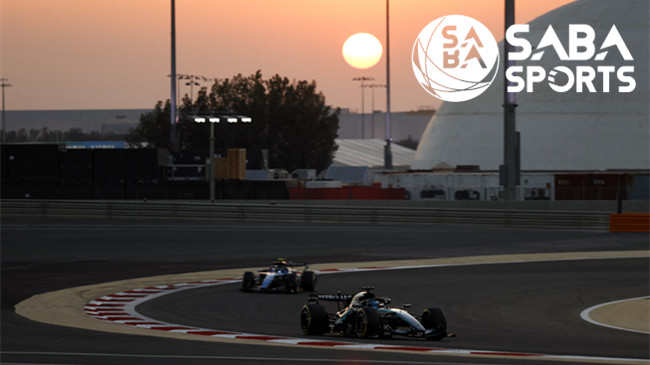
Source:REUTERS/Hamad I Mohammed
[Saba Sports News] For many years, the determination of track boundaries has been one of the most consistently controversial issues in F1 Grand Prix racing. Drivers naturally push the limits of the rules to improve their lap times and are eager to report rivals they believe have exceeded track limits. Starting from this season, a new system called ECAT will monitor track boundaries at each corner through an advanced platform that uses artificial intelligence to interpret each car’s behavior on the track. The FIA has developed an automated tool with Catapult to detect when all four wheels of a car cross the white line and integrate it into the RaceWatch system used by the event control center and remote operation center to monitor everything happening on the track. According to the FIA, this computer vision-based tool has reduced the number of cases requiring human judgment by 95%. The computer vision system integrated into the RaceWatch system can identify the outline of the car and analyze its behavior based on preset reference points captured by cameras to determine whether the car has crossed the reference line.
The editor believes that the improvement in track boundary detection methods is due to a more advanced system that has also redesigned the entire data analysis process. Today, AI-based recognition technology relies on high-performance GPUs to process all the required information in real time for each lap, enhancing the accuracy and speed of inspections.