

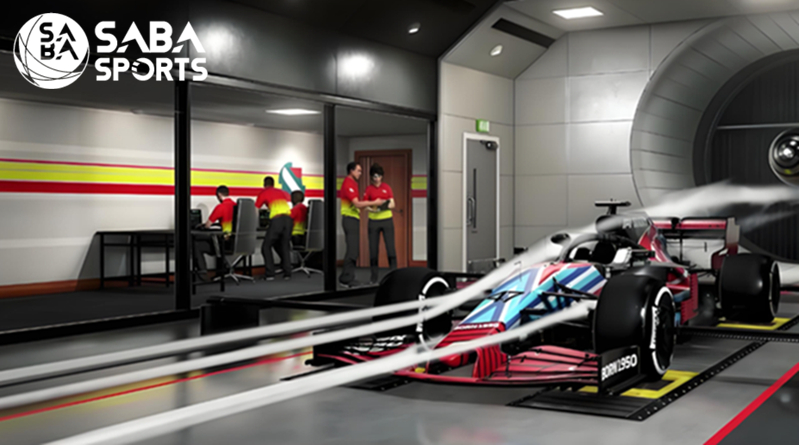
[Saba Sports News] Aerodynamics is extremely vital to Formula 1 cars. It mainly studies the force-bearing characteristics, gas flow rules and accompanying physical and chemical changes of racing cars during relative movement with air and other gases. Nowadays, all teams conduct wind tunnel tests to optimize and verify their aerodynamic components, allocating substantial budgets to such research. It is acknowledged that the faster a car travels, the greater the air resistance it encounters. The core of F1 aerodynamic design lies in generating sufficient downforce while minimizing drag.
F1 wind tunnels cost a fortune, usually valued at tens of millions of US dollars. Most teams adopt closed-circuit wind tunnels, which consist of force-measuring balances, flow field visualization devices, pressure measurement instruments and other key components. Wind tunnel tests simulate intense aerodynamic effects during on-track driving. The equipment can tilt and rotate car models to replicate various head-on airflow postures.
Under FIA regulations, teams are only allowed to use models no larger than 60% of the actual car size, with wind speed capped at 180 km/h. In addition, each team is limited to a maximum of 12 sets of test tires per year. Thanks to wind tunnel experiments, even minor upgrades to small wing elements can shave off tenths of a second per lap.
In my opinion, wind tunnel testing serves as the cornerstone of F1 performance improvement and embodies a team’s core technical strength and competitiveness. Despite the rapid development of Computational Fluid Dynamics (CFD), which can partially replace wind tunnel tests and cut R&D costs, the intricate aerodynamic interactions of F1 cars still require authentic data obtained from wind tunnel trials.