

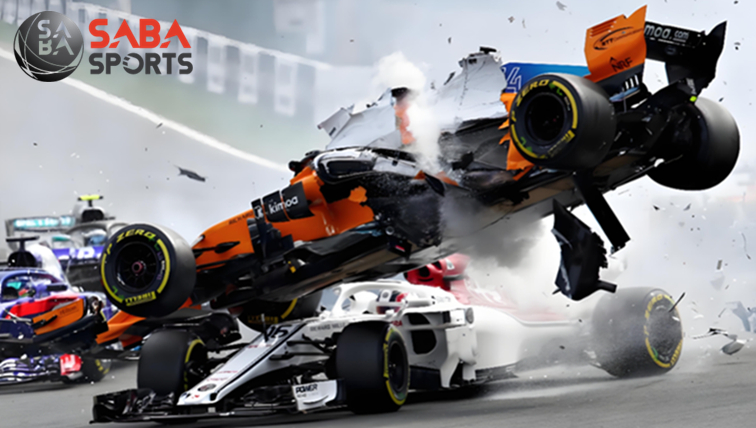
[Saba Sports News] Every February marks the official launch period for new cars across all Formula 1 teams. For the Fédération Internationale de l’Automobile (FIA), however, February each year is an intense window for new Formula 1 crash tests. It is mandatory for every new car to pass a full series of rigorous assessments before being homologated for track competition. The FIA regards safety as the absolute top priority. Accordingly, these tests cover every potential scenario in a crash, including: survival cell frontal impact test, roll structure test, survival cell load test, side impact structure test, frontal impact structure test, rear impact structure test, steering column impact test and headrest load test.
Should a team modify its car design mid-season, the revised vehicle must undergo complete crash testing once again. The most demanding assessment is the survival cell frontal impact test, which requires the car to withstand two successive frontal collisions. After the first impact, key components must remain intact, and the chassis must still be structurally sound to endure a secondary crash.
Thanks to the FIA’s stringent safety regulations and inspection standards, Haas driver Oliver Bearman survived an extremely violent crash at this year’s F1 Japanese Grand Prix, enduring peak forces of up to 50G at the moment of impact. Fortunately, although he exited the car slowly, he escaped without severe injuries.
In my opinion, F1 crash tests are not merely technical compliance requirements, but also the ultimate line of defence for drivers’ lives. The testing framework is scientifically designed, strictly implemented and continuously upgraded. For instance, rollover test standards were strengthened following Zhou Guanyu’s serious accident, fully embodying the FIA’s core principle of safety first.