

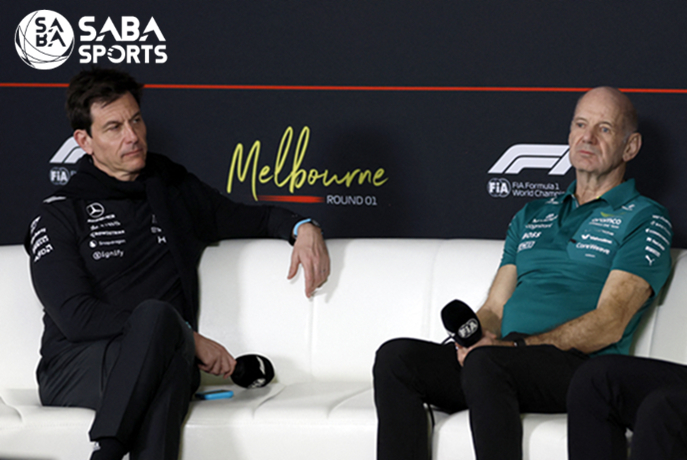
Source:REUTERS/Hollie Adams
[Saba Sports News] On the eve of the 2026 season opener, Honda President Yasuharu Watanabe admitted that the gap experienced during Honda’s return to F1 has had a tangible impact on its new power unit project. With the arrival of new regulations, the collaboration between Honda and Aston Martin faced its first significant real-world tests; however, the pre-season testing phase has revealed considerable challenges and issues.
Records show that Honda ceased its factory team status at the end of 2021, leading related engineers to return to the mass production department or transition to other roles, with several technical personnel departing in 2022. It wasn’t until 2023, after confirming its return to F1, that the company reorganized its team. Watanabe pointed out that when the framework for the 2026 power regulations was essentially finalized in 2022, Honda had not yet completed the return of its core personnel, missing a key preparation window. Additionally, with the introduction of cost caps starting in 2023, structural limitations hampered progress, creating a time lag.
Previously, Aston Martin had limited lap counts during tests in Bahrain and Barcelona and faced issues such as engine vibrations. In response, Honda’s president revealed that they are working on rectifying these problems.
The editor believes that the 2026 F1 regulations, which eliminate the heat recovery system (MGU-H) and significantly increase the proportion of electric energy, require the kinetic recovery unit (MGU-K) and battery output to reach three times that of the original system, mandating the use of 100% sustainable fuel. This forces all manufacturers to rebuild their power units from the ground up. As a newcomer, Honda’s weak technical accumulation and the gap compared to other manufacturers are understandable.