

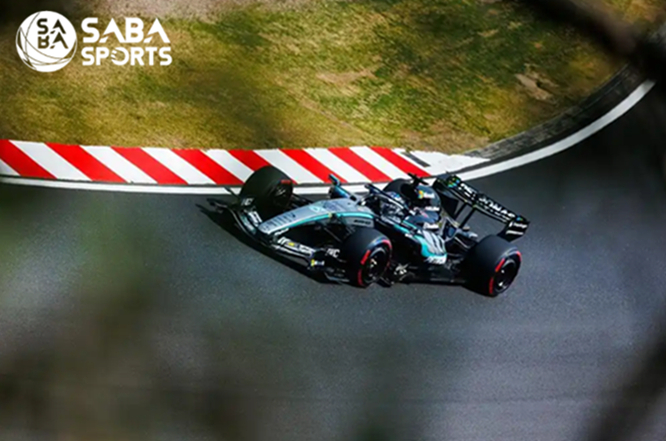
[Saba Sports News] According to The Race, the FIA has officially banned Mercedes and Red Bull from using performance-boosting “acceleration tricks” during qualifying. Previously, the two manufacturer teams had found clever workarounds to bypass the mandatory power reduction limit for power units when battery energy is depleted at the end of straights. Under FIA rules, at the end of a qualifying flying lap, as battery energy nears exhaustion, the power unit must reduce output in a “smooth ramp-down” manner — cutting power by 50 kW per second — to avoid a sudden drop in performance.
However, Mercedes and Red Bull discovered a technical loophole that allowed their cars to avoid this power reduction phase and maintain maximum output for as long as possible when crossing the finish line. Under normal circumstances, switching off the MGU-K during the race or most of qualifying would result in a power loss of 350 kW over 60 seconds. But doing so at the very end of a qualifying flying lap does not trigger such a penalty. Although this advantage only amounts to a few hundredths of a second per lap, it can be decisive in highly competitive qualifying sessions.
In my opinion, while the FIA ban is seen by some as a “post-facto fix”, it is reasonable and necessary given the high technical complexity and strict safety standards in modern F1. It curbs potential risks, reaffirms the governing principle that the spirit of the rules prevails over literal loopholes, and helps preserve the long-term credibility of the sport.