

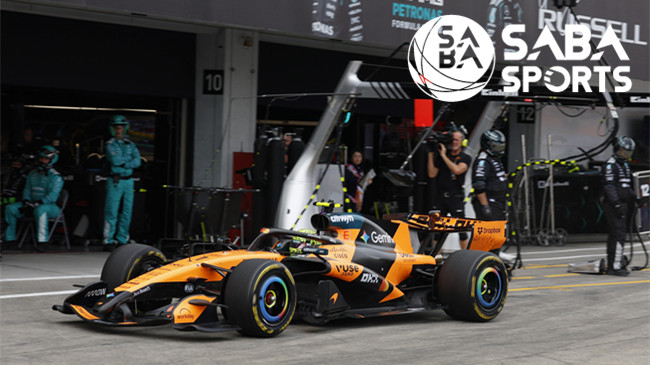
Source:REUTERS/FRANCK ROBICHON
[Saba Sports News] Following the Chinese Grand Prix, McLaren confirmed that Lando Norris’s first battery pack was completely damaged and could no longer be used. A new battery and control electronics were fitted for the Japanese Grand Prix. However, during FP3 practice last Saturday, Norris’s car suffered another ERS failure, forcing the team to deploy yet another new battery and control unit. As a result, Norris has now reached his season limit for batteries and electronic control units.Under the 2026 technical regulations, power unit components are defined as follows: ICE (Internal Combustion Engine), TC (Turbocharger), MGU-K (Kinetic Motor Generator Unit), ES (Energy Store / Battery), CE (Control Electronics), EX (Exhaust System), and PU-ANC (Power Unit Ancillary Components). The season usage limits for each are:4 ICEs;4 Turbos;3 MGU-Ks;3 ES batteries;3 CE control units;4 Exhaust systems;5 PU-ANC ancillary components.When a driver exceeds the season quota for a component for the first time, they receive a 10-place grid penalty for the race. Any subsequent breaches of the same component result in a further five-place penalty each time. If cumulative grid penalties exceed 15 places within a single race weekend, the driver must start from the back of the grid.This means that if Norris replaces either his battery or control electronics in any upcoming races, he will face grid penalties.
In the author’s view, Norris has no remaining quota for batteries or electronic control units. Any further failures of these parts will directly translate to race-day grid penalties. This not only undermines his competitiveness but also forces the team into a difficult trade-off between reliability and performance.