

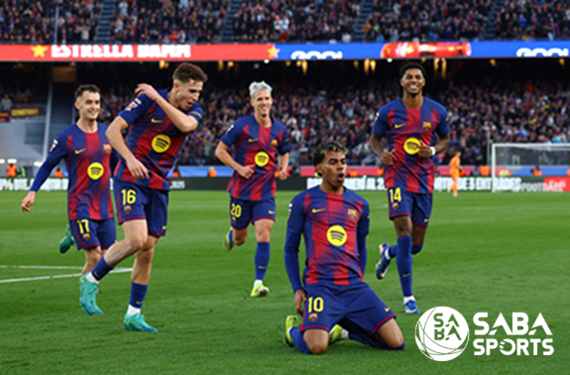
Source:REUTERS/Albert Gea
[Saba Sports News] Moments ago, La Liga side Barcelona announced a blockbuster decision: the club has withdrawn from the European Super League. With this move, Real Madrid stands as the sole founding member left among the original 12 clubs clinging to the competition, rendering the Super League all but a hollow name in practical terms.
Every club that pulled out had its own reasons, with practical interests and financial pressures being the primary drivers. None were willing to antagonise UEFA for the sake of sticking with the Super League – after all, Champions League qualification and broadcast revenue are far too crucial for the clubs. Being excluded from the mainstream football ecosystem would bring massive losses. What’s more, participating in the Super League could incur hefty breach of contract penalties, a financial burden too great for most clubs to bear, forcing them to withdraw and return to UEFA’s fold.
Real Madrid’s unwavering stance stems partly from legal backing: the European Court of Justice previously ruled that UEFA had engaged in anti-competitive monopolistic practices, providing the Spanish giants with a legal basis to continue their support. Yet the club also finds itself in a precarious and isolated position. No other elite clubs are willing to join its cause, making the actual operation of the Super League impossible. National football associations and domestic leagues across Europe have also introduced relevant regulations, stating that participation in non-UEFA competitions could result in the loss of eligibility for local tournaments. Real Madrid is thus left stranded and without allies.