

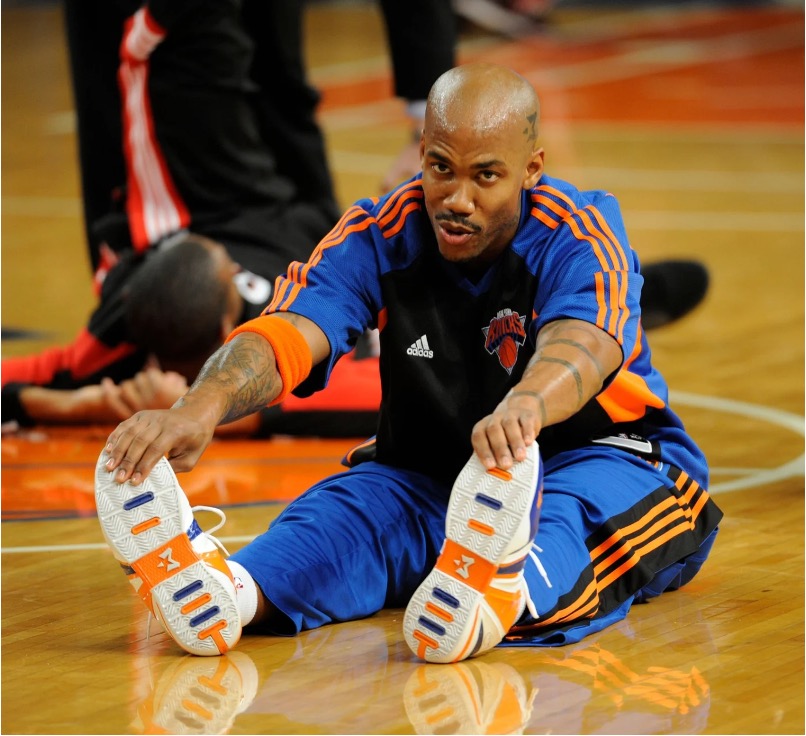
Image Source: X
[Saba Sports News] Stephon Marbury, a standout NBA point guard and two-time All-Star of the early 2000s, remains a memorable figure not just for his on-court performances but also for his bold decision to make his signature “Starbury” shoes accessible to everyone.
Launched in 2006, the sneakers were priced at just $14.98—a rarity in a market dominated by expensive, high-end athletic footwear.
In a recent appearance on Vernon Maxwell’s podcast, Marbury shared his motivation behind the low price point, “I mean $14.98, access for all people who couldn’t afford [expensive sneakers]. I come from where I come from. My mom, seven kids, she could afford to do it. We grew up like everybody else from the hood. But I understood the importance of giving back, making sure that we created something that people would be able to attach themselves to.”
He added, “My ideology is to treat people the way you want to be treated and win it back sevenfold. Once we created what we created with Starbury, it went all over the planet. We were cornering the market, selling shoes and clothes at an affordable price for Black people who couldn’t afford Michael Jordan shoes.”
While the Starbury brand was short-lived, it made a significant impact during its run, selling over a million pairs thanks to its affordability and popularity in China, where Marbury continued his basketball career after leaving the NBA. Despite its initial success, the brand faded after Marbury’s move overseas.
Marbury’s 13-year NBA career included stints with the Minnesota Timberwolves, New Jersey Nets, Phoenix Suns, New York Knicks, and Boston Celtics. He averaged 19.3 points, 3.0 rebounds, and 7.6 assists per game, but his sneakers—designed for accessibility rather than status—remain a unique chapter of his legacy.
Marbury wasn’t the first NBA star to prioritize affordability in the sneaker market. Shaquille O’Neal, one of the league’s biggest names, had already taken a similar approach by pricing his signature shoes at $29. Shaq explained his reasoning in an interview:
“We shouldn’t be charging these kids over $100, $200, $250. The babies wearing them can’t afford that. Personally, as a 49-year-old man, I felt ashamed selling my babies’ shoes for $160, $180, $200. I know a lot of kids get teased for wearing my shoes. But if you look at my shoes, they don’t look like they cost $29, and I take pride in that.”
Shaq’s immense stature in the NBA made his affordable shoes a cultural success, offering fans a chance to wear gear associated with one of the game’s greats. His success also paved the way for Marbury’s Starbury initiative, demonstrating that high-quality, low-cost sneakers could resonate with basketball fans.
Despite the noble intentions of both Marbury and O’Neal, the sneaker market remains dominated by brands like Air Jordan, whose products often sell for $100 or more and generate billions annually.
Marbury has frequently criticized the inflated prices of such sneakers, contrasting them with his own vision of affordability.
While the Starbury brand no longer exists, its impact lingers as a testament to Marbury’s commitment to giving back and creating something accessible for all.
For fans who grew up wearing Starburys or Shaq shoes, their legacy is a reminder that basketball’s influence extends far beyond the court.