

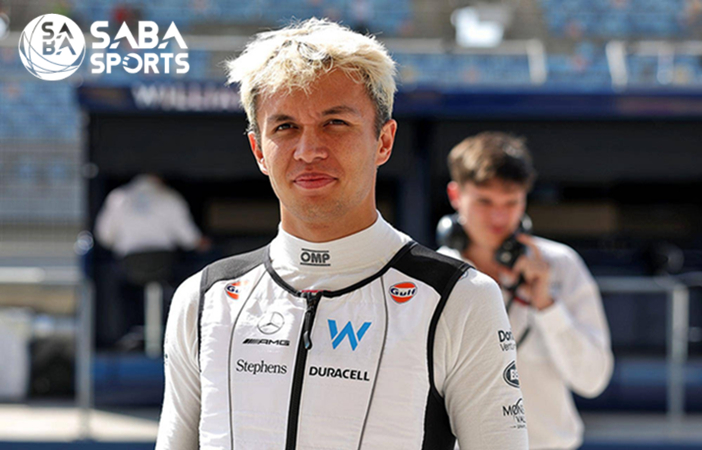
[Saba Sports News] Alexander Albon, driver for the Williams Racing Team in Formula 1, recently hosted a livestream on social media where he played a racing game, drawing the attention of numerous motorsport fans. However, Albon turned in a lackluster performance in the game, making frequent mistakes, which became a talking point among the fans.
During the livestream, Albon complained, “This game is so unfair. Driving a real race car isn’t even this hard.” His remark had many fans in stitches. Some fans even teased him, saying, “You clearly haven’t practiced enough on the simulator—hurry back to the team for extra training sessions.”
Albon’s complaint was no exaggeration; it actually highlighted a common dilemma that professional drivers face when playing racing games. There is a huge gap between the control logic of real race cars and virtual ones. In real-world racing, drivers can accurately judge the condition of the car through steering wheel feedback, vehicle vibrations, and tire grip, which helps them build up muscle memory. In contrast, racing games only rely on visual and electronic signal feedback, lacking crucial physical sensations. Even top-tier drivers like Albon have to re-adapt to this virtual environment.
In the author’s opinion, this playful interaction between fans and the driver also showcases the unique fan culture of Formula 1. The collision between virtual gaming and real-life racing injects fresh vitality into the sport.