

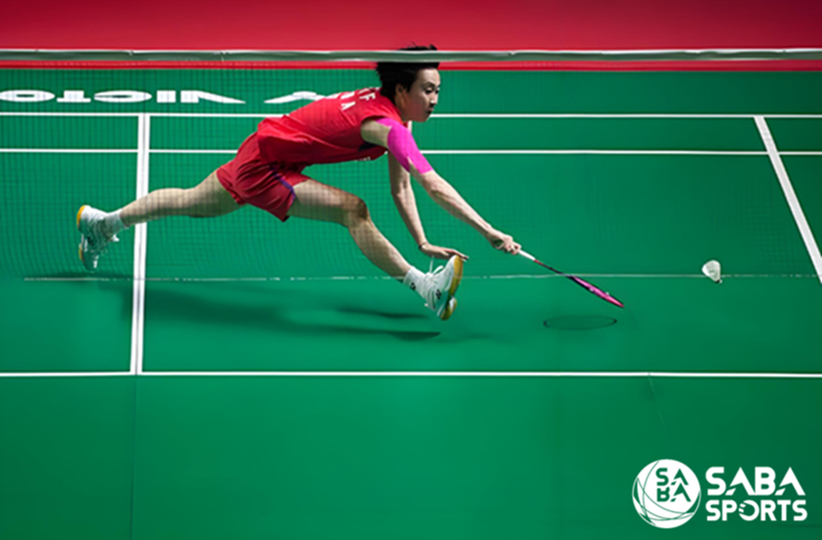
[Saba Sports News] In 2026, the Badminton World Federation (BWF) introduced several new rules, one of which is the trial implementation of the 25-second shot clock rule. It requires players to be ready for the next rally within 25 seconds after the end of each point. Failure to do so may be regarded as intentional delay of play and result in a yellow card warning.
According to public records, the most recent yellow card in an international badminton tournament was issued during the women’s singles semifinal of the Indonesia Masters 2026 on January 24, 2026. Chinese shuttler Chen Yufei was warned by the umpire for “delaying the match” while serving, after winning the first game 21–15 and leading in the second game. The specific reasons cited were “slower rhythm” and “taking too long to prepare to serve after wiping sweat.” Nevertheless, Chen Yufei was unaffected by the yellow card and eventually defeated Nozomi Okuhara 2–0 to advance to the final.
As it turns out, badminton matches feature not only yellow cards but also red and black cards.A yellow card is issued when a player repeatedly violates the rules, serving as a formal warning to comply, with further penalties to follow if violations continue. A red card is given to a player who has already received a yellow card but continues to infringe. The player is ruled against, and their opponent is awarded one point. A black card is used in cases of serious or repeated rule violations. The umpire rules against the player and reports the incident to the referee, who has the authority to disqualify the player from the match depending on the severity of the offense.
In my opinion, the yellow, red and black card system in badminton serves as a disciplinary tool for conduct management, rather than a penalty for physical or technical performance. Its design follows a progressive disciplinary logic: warning — penalty point — disqualification, which helps uphold the standards and dignity of competitive sports.