

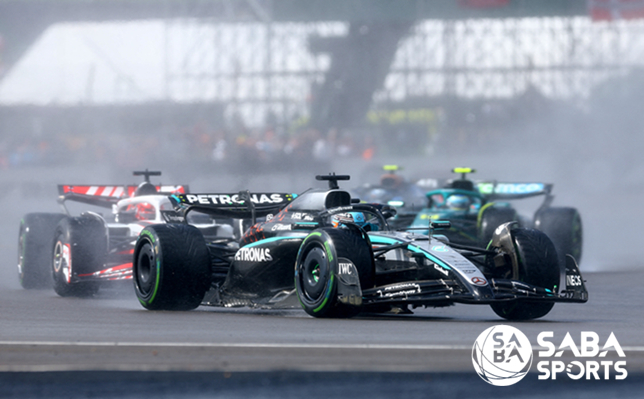
Source: REUTERS/Andrew Boyers
[Saba Sports News] In last week’s British Grand Prix, Mercedes tried to break the situation with a bold strategy, deciding to start on dry tires on a wet track. However, the reality proved that this move did not bring the expected results. Before the start, although the Silverstone circuit was sunny, most areas still had residual moisture, so most drivers chose to use intermediate tires. George Russell and four other drivers decided to enter the pits after the warm-up lap and switched to dry tires, hoping to take advantage of the potential drying of the track. Mercedes explained after the race that this decision was based on the judgment that the track would dry quickly, and they believed it was the correct choice at the time. Russell did not lose much position at the start, and the risk of using dry tires seemed to gradually turn into an opportunity. However, this strategy was disrupted by the continuous appearance of the virtual safety car and the slowing pace of the race. Low-speed driving made it difficult to maintain tire temperature, leading to reduced performance of the dry tires. After just a few laps, the rain intensified, forcing Russell to pit on lap 10 to switch back to intermediate tires, marking the failure of the initial risky strategy. Although the early strategy did not work, Russell managed to finish in 10th place thanks to the safety car and stable performance later in the race.